Early in the morning, Rask rises to his feet.

Armored and clean. Back in the scene.

As usual, he quickly scoops up and girds the Black Blade of Aegier.

Unusually, he does not stretch or patrol the permiter.

Instead, he immediately moves to find Alexis Laelius, leader of the Crimson Calling.

No longer exhausted, the deadly Aegeirien warrior finds and rouses the Sutheroni lordling.

“We need to talk,” Rask says in an even; non-threatening tone, as he gently shakes AlexIs’ shoulder.

Once Alexis is a awake and ready, Rask speaks again, calmly:

“I am not a mercenary Alexis. Not yours or anyone else’s.”

“I’m not much of a treasure hunter or deal maker either. I know what I am.”

A hint of sadness, a heap of resigned determination.

“I joined with you because we seek a common goal: the end of the Dark Hand.”

“It is time for us to figure out how to trust each other, our work will only get more dangerous.”

“I need to know, from you, why you wanted those… Dwarves… to live and escape.”

Ignobility of a Jail Cell

Ca’armine does not like being caged, he discovers. On reflection, he realizes, neither does he prefer being ambushed. Or, violating the sanctity of the Collegium, which he can’t help but respect and even fear. He muses, “I can forgive myself for drawing my weapons when the enemy attacked, since they were in earnest about killing us. But I am doubtful the Collegium will overlook the transgression.

He paces. Back and forth in the cell, stepping around his companions, watchful. He has not been traveling with them long, but he feels sure they will not harm him nor help themselves without aiding him too. However, he is learning that they are not infallible.

“Who is?” he chides himself. But he realizes, in his longing to join a group, to take up the cause and make meaning out of the exile in which he found himself, he unwittingly created in his mind, a vision of these heroes (surely they deserve that title!) as larger-than-life.

“They are powerful, certainly, but they do make mistakes.” He thinks about the nonchalance with which Alexis led the stopover at the Collegium today. “Rask didn’t even put on armor! As if he could blend in with the crowd. As if any of us could!” He shakes his head.

He is loathe to tell Alexis, or any of the group, what they should or should not do… but at the same time they would be wise to emulate his long habit of stealth and concealment. “What do we stand to gain, boarding in the gaudy manor of their friend the thief? Why are we operating in Suthron at all? I long to strike a blow at the Dark Hand, but it seems we are easily manipulated, by anyone who tells us we are getting closer to finding them. We are in truth pursuing the agendas of others, more interested in gold than in justice.”

Ca’armine Travels to Southron

I reach the top of a steep incline, and look out over the valley ahead. The pack mule is loping along at the end of a long lead rope, and I twitch it out of habit. In front of us the trail turns right, and goes steeply downhill into a copse of live oaks that obscure its next turn. However, well down the mountain, I can see where the path comes back out of the forest, and rejoins another path at the edge of a stream. That junction is about a thousand feet down, and probable a mile and a half away, as the crow would fly. It’s going to be a steep traverse.

As the mule catches up to me I look back the way we’ve come. Though the past few miles have been steep, the path wound its way up a very broad hogsback before this, much less steep but more exposed. I can see the path along that ridge, but it dips below my sight and follows a creek into a different valley. That was was the kingdom of Aegir, where I lost my faith. Ahead is the kingdom of Southron, where I hope to find it.

I have been traveling for weeks now, following a rumor that is sometimes whispered, sometimes silent—about a band of righteous redeemers who have harried the Raidensblud and the Dark Hand, who have consecrated evil places and driven out black-hearted men.

The rumor is that they are seeking my supreme foe, Bandesingh—and they, like me, will sacrifice everything to bring justice to him for the countless atrocities he, and his minions, have committed.

It’s just past midday and fortunately the sun is behind clouds, but it is still possible that I will be seen from one of the many far-off vantage points with a prospect upon this high point. My mule and I start the descent down into the cool shadows of the trees, keeping a relaxed pace. The crossroads I saw, may well be the furthest we make it tonight.

Raiden, hear my prayer—that I may indeed find this band of heroes, that they may include me in their ranks, that we might, together, expose the Raidensblud for the traitors they have become. A chill goes through me, as it always does when I make this prayer. I know that Raiden hears me, but does he approve? Turning my back on the Raidensblud, after my initiation, was the hardest thing I’ve ever had to do, and it still pricks my conscience, even though in my mind I know this to have been right action. Breaking oaths is wrong, is it not? Even when the oath is to someone—or to the divine order—that only pretends to be righteous?

For months, after learning the duplicity of my order, I kept still and silent hoping that some additional information would contextualize the truths I had beheld, and help me to understand and assimilate those facts, with the divinity and purity that my order espouses.

But it was not to be. How could I have been hesitant? Seeing my fellow priests and acolytes, sacrifice a child on our altar, in a secret ceremony to honor, not Raiden, but a darker and unnamed god. Hearing them talk about the decision to sanctify the king and use his sanctity to fuel the Raidensblud’s choke-hold on Aegir. Witnessing with my own eyes, the master clerics of my order tattooed with corrupt symbols and repudiations of the true god Raiden. They should not have let me see, but they did. They should not have let me hear, but they did. They should not have let me run, but they—all but Kennic—did let me run, and they should have known better than to think they would catch me once I was outside the friary. I am too wise for that.

Kennic. I blow my breath out of my mouth, not from weariness for now that the path is downhill, I am walking easily, but instead as a learned behavior, something I do whenever the death of my friend comes into my mind. He tried to stop me, first in the friary when I was gathering my short sword and shield, then again at the gate when he realized that my ruse—telling him I was not leaving, of course not, but merely backing up Frollor on his third night shift in a row—was unlikely to be true (Frollor being injured and recuperating in the infirmary after all).

He had stood in front of me, blocking the cobblestone path that led around a last bend and gave out on the small courtyard surrounding the curtain wall’s camouflaged ranger door.

“Ca’armine, you can’t leave,” he said to me, his hands facing me, palms out. “Raiden’s command is for all his loyal soldiers to stay here tonight, to prepare for the coming sortie of the elves, to ready themselves to rally to Aegir’s banners. They will kill you if they see you outside the gates!”

Kennic was not wrong, they would at least try to kill me, if I were seen on the road. The guards on the towers guarding the main gate, would use their crossbows or even the ballista, if they were to see me and my laden donkey sneaking out through the spy gate.

They would send a chase squad after me. They would not want a consecrated priest—not even an acolyte anymore!—striding out into the dangers of the outlands, loaded down with all his possessions. Even at my relatively inexperienced stature I knew many secrets, and the lies told to make others believe.

Kennic would not hear reason. I sensed that his motive was selfish, yes, but not evil—he did not want to be associated (as he would have been) with a cellmate who had abandoned the post and the Order. He needed to stop me, though I am sure he knew that it was not possible. He stood in the road and I advanced on him, dropping the donkey’s rope.
Kennic had studied the martial path, as I had when I first arrived at the Temple of Raiden’s Blood. But where I had branched out into wilderness training, he had stayed focused on soldiering. He hefted his halberd, and pointed its cruel spike in my direction.

“Don’t make me hurt you Ca’armine. I have the watch tonight, the inner gate watch, and it is my job to stop deserters one way or another.” He spun his halberd in his hand, so that the sharp blade was now at the 3 o’clock position. A backswing from his right hand would bring that blade into slicing position, but so far he had not raised the weapon to a fighting stance.

“I cannot remain here, Kennic.” I said simply. “You have not seen what I have seen, nor heard what I have had to hear. I envy you my friend; I wish things had gone much differently. However, now that I am enlightened, I cannot ignore the evil heart of our order. I must depart. You could join me Kennic, but you cannot stop me.”

My hands were open at my sides, no weapon in either—offering no resistance other than my words. He stared at me in disbelief. “Still you go on about corruption in the Raidensblud? How can you say things like that! The light of Raiden shine upon you, as it shines upon me and all of the Raidensblud. Let it shine on you, and in you, and purge the taint of your sorry soul.” His eyes flicked to something over my right shoulder. I spun to follow his eyes, and saw Harbang, the acolyte, coming up the path behind me. He was carrying a mace in his right hand, and looked afraid. I was outflanked.

I shudder again, unable to stop myself from remembering the carnage that ensued. As I saw Harbang, I heard the slap of the halberd’s haft as it changed position in Kennic’s hands, and my training took over. I swept my short sword out of its scabbard and off of my right hip, at the same time as I drew my longsword with my right hand, from over my right shoulder. The acolyte startled, and I whirled without looking, launching backward from my left foot, spinning as I did so, both swords out full. Kennic had tried to close the gap when he saw me turn to face the approaching acolyte, and he had swiftly moved to engage me. However, he was no match for my swords. He used his halberd to deflect the long sword, but it was a wild swing that left him undefended, and my short sword followed through, slicing through his throat as I continued turning, and ducked my own rebounding blade.

His hands, no longer holding his weapon, clasped the gaping wound in his throat as he gurgled, and crumpled to the ground. My movement continued, bringing me all the way back around to face the acolyte again. I brought my two blades back together across my body, and saw the fear in the acolyte’s face. He turned to flee, and I decided that my best chance to escape undetected was still this present moment. I grabbed the mule’s lead rope, and hurried to Kennic’s unmoving form. I dragged him into a shadowy alcove by the rear entrance of the Snapping Crab tavern, where a stack of empty barrels would keep him from being discovered for at least a few minutes. I sheathed my swords and the donkey and I resumed our progress toward the spy gate.

I looked down at my Raidensblud cloak, unmarred by the sudden violence I’d just wrought. When I looked up again I had reached the gate, where Subrack was on guard. He saw me coming and stood up from the rock where he was perched during the long night shift.

“Ca’armine, what are you doing here? You know it’s too late to leave the fort, by this gate or any other! What are you doing with a laden mule at this time of night?”

“I have orders, Subrack. After consecration, Father Blythe asked me to take a message, I’m to be on the road 8 days. Heading east.” I pulled a piece of parchment out of my robe, and handed it to him. There was nothing on it, but it did the trick of drawing his attention and his hands. As he looked at the parchment and flipped it over to look for the orders, it was merely a twitch of the arm to bring up my studded mail glove and strike him behind the ear, a hard blow. I am very strong and Subrack, not hearty—he went down hard. I quickly pulled down on the counter-weighted rope to retract the spy gate’s spiked portcullis, and took the rope with me as I led the mule past the threshold. Once through the gate I lowered the portcullis, and tossed the rope back to rest close to Subrack’s motionless body. At least I did not have to kill that one!

From the spy gate, I followed the path, which eventually led back toward the main gate. Obscured as it was, by a hedgerow, I could not be seen from the walls nor by anyone other than perhaps a beast of the forest, come down at night to scavenge food from the scraps routinely thrown out over the city wall. I left the road and went behind the hedge, hard against the cliff-face that formed the rear of the citadel. The mule and I kept close to that rock wall as we worked our way past the thick hedge. The ground went sharply downhill, and I followed that, eventually making my way to the edge of the forest. The trees had been cut down , between the hedgerow and the cliff, to prevent someone like me from doing exactly what I was doing now—sneaking out a largely unmonitored gate, in the middle of the night under a dark, moonless sky. The mule and I stayed close to the hedge, rather than staying to the cliff-face, even as both plunged down into a ravine. Moving slowly so as to not catch the eyes of the guard on the tower, and keeping myself hidden against the hedge, I made my way down the slope and eventually came to a small waterfall, where the cut trees began to give way again to saplings and, close enough, to tall trees. The mule was not fond of the steep, rough terrain, but at least it was forest duff and not dry, packed dirt.

We walked in the stream for a time, more than a mile, to throw off pursuers. I started out of the streambed on the side closest to the fortress, then doubled back into the stream and, half a mile further, exited the stream going the other direction, taking care not to leave a trace as I did so (and clearing mule tracks behind me with a switch), I went into the forest at the base of the cliff.

I did not stop my progress throughout the night and well into the morning, though fatigue was making me fear I had forgotten something crucial, and my mule was done walking for the night. Finally, some 10 wooded miles from the castle, I tethered the mule close to a gorse bush, and let him browse there while I wriggled under a pile of leaves and duff.
The ruse worked; mid-day I was awakened by searchers but they were well to the east, having been lured by my misstatement to the spy gate guard, and by the false trail I set for them to follow. I waited until they had moved off in that direction, then the mule and I began again, moving West Northwest, a direction I followed for the next two days before turning south, and heading due south through the afternoon and evening, putting more and more distance between myself, and the fortress.

I knew that once the Tavern opened they would find Kennic’s body, and all would be lost! If only I could have brought myself to kill the guard as well… but he was no threat to me, and by Raiden he was not evil. “Nor was Kennic,” my conscience told me, but I was not so sure. He had already been told, as I had, that Raiden’s mysterious plans sometimes required one to do something that at least seemed, to be inconsistent with Generous Raiden’s Divine Guidance, to help the poor and sick, to shield the world of men from tyranny. He had presumably done that thing, since he was not sneaking around the fortress at night. His soul, I told myself, had already begun the shift to evil.

That was three years ago. Not a day goes by, I think to myself, that I do not consider poor Kennic, my friend, whose death became a necessary prelude to my quest for the true light of Raiden. Many times I had prayed over that moment, and though I can find no alternative path, my soul feels disquieted by what seems like an unnatural act—killing a friend who stood in my way, who would not listen (though I tried!) to my concerns that the Raidensblud was not who they pretended to be. What would be Raiden’s judgment? Disobedience to the leaders of my Order could, at least in my mind, be forgiven and set aside, once their true nature was known to me beyond any shadow of a doubt. But killing someone who, though perhaps following evil, was not, himself, an evil man? Can any person be reduced to the ends they serve, and the masters they follow?

I roamed, I trained, I prayed, and when there was an opportunity, I helped. I helped townspeople to rid themselves of mercenaries who had camped in their forests and stolen from the town. I helped travelling bands who had been waylaid by brigands. All the while, Raiden still smiled upon me, and granted me to learn and grow in my spellcraft, and in my woodscraft. I grew stronger, wiser, and greater in my endurance. Mighty as I felt, the day I left the fortress to fend for myself in Raiden’s wild land, I now felt much, much stronger and more sure. I longed to take the fight to my foes, if only I could determine how best to do so.

Then, just half a year ago, I was in a tavern one evening, dressed in a woodsman’s cloak and staying a night in the inn to stay out of the rain. At a gambling table nearby, a braggart—flush with wine and with the winnings of two or three hands—was recounting an incredible tale of a mercenary band who wanted nothing more than to destroy King Aedelfred and ruin the Raidensblud. Nobody at the table was willing to believe his stories, and they mocked him, but that only made him more insistent. He said he had seen them with his own eyes, and they had asked him, scrawny little creature that he was, to come with them to Southron to meet their lord.

“Play dice or talk, you choose,” said one of the gamblers, cooly, “but if you won’t shut your gob I’m done with this game.” The braggart got back to playing, and lost three rounds in a row right after. But as he was gathering up what was left of his money, he couldn’t help but say, “you fellows think you know everything but you do not. King Aedelfred is an imposter, these fighters were saying, and they are going to expose him. He’s not even the king!” With that he headed for the door, and the bouncers were quick to pass him along and out into the night.

Wherever I went after that, I listened a little harder and asked enough questions, that people would tell me the rumors they had heard, as well. All the information I gathered, pointed to a Southroni connection who provided shelter to these heroes when they were not actively engaged in contending with the Dark Hand… or the Raidensblud, if they could even be said to be distinct entities any longer. Word was that they had not been that way in many months.

With those words in my ears, and no fresher intelligence about their whereabouts, I turned my mule towards the long road to Southron, to find these heroes or their Southroni comrade. One man, even a righteous man, can only do so much against the great tide of evil the Raidensblud have brought to Aegir. But with a team, one might do much, much more.
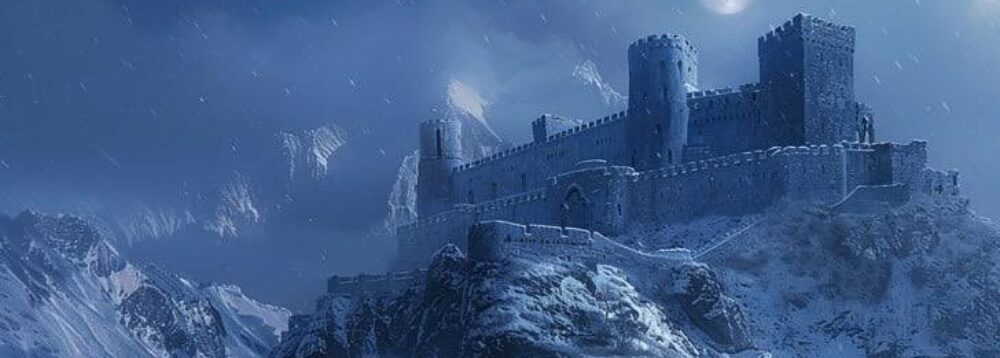
Coming Home, Again

The night before the Crimson Calling enters Sutheron.

“Tonight I stand before you not just as Alexis Laelius, renowned treasure hunter and lore seeker, but as a son returning to his beloved home city, a place where the echoes of my family’s leather working craft still resonate through the cobblestone streets.”

“As I prepare to walk those familiar avenues, I can’t help but feel a rush of memories. Memories of my father, tirelessly crafting fine leather goods with hands weathered by time and toil, trying to instill in me the value of hard work and dedication. Memories of my mother, whose gentle spirit and unwavering support guided me through the darkest of tombs and the most treacherous of pits. And let us not forget my dear younger brother, who shares in our family legacy, ensuring that our craft endures through the ages.”

“But there is another figure, a mentor whose wisdom illuminated my path like a torch in the darkness. Publius Helvius Laeca, sage of our city, whose passion for humanity’s past glories and the pursuit of lost artifacts ignited a flame within my soul that has burned ever brighter with each discovery, each adventure.”

“I am reminded of the rich tapestry of history that weaves through the very fabric of our city. A city where old meets new, where the craftsmanship of antiquity mingles with the innovations of tomorrow. Yet, amidst this juxtaposition, there lies a challenge, a challenge to uphold the standards of excellence set by our forefathers, to preserve the legacy of our ancestors, and to safeguard the treasures of our past for generations yet to come.”

“For too long have we allowed the shadows of mediocrity to cloud our vision, to tarnish the splendor of our… heritage. But fear not, for I return not only as a prodigal son but as a champion of our city’s greatness, a defender of its legacy.”

“Together, we shall embark on a new quest, a quest to free humanity from the shackles of those who would enslave us and send us into the dark. The path ahead will be full of peril, and though the challenges may seem insurmountable, I know that the Crimson Calling is up to the task!”

“So let us raise our voices in triumph, let us march forward with heads held high, for we are the heirs of a legacy forged in the fires of history, and together, we shall write the next chapter of our not just our city’s tale, but the tale of humanity once-sundered, being stitched back together. And remember, as we journey forth into the unknown, we do so not as mere mortals, but as guardians of humanity’s past, present, and future.”

“To glory, to adventure, to the enduring spirit of humanity!”

The Road To Sutheron

Throughout the ride to Sutheron, Rask takes an on-watch posture while travelling, often at the back of the group, on guard crossbow loaded and eyes on his horse’s ears and the surroundings. If asked, he takes point. Either way he pulls his plain brown cloak in close over his plain brown tunic and does his best to appear inconspicous.

In camp, Rask takes on the standard camp tasks as much as Gustav will let him help. He is actually useful while hunting, a knows a handful of edible wild plants, much to Gus’s suprise and consternated delight.

Rask takes last watch when given the choice, and always wakes early. He does a series of excercises every morning; push-ups, sit-ups, burpees, pull ups if there is a decent branch available, and such. He tends to the horses, checks their feet and brushes them out every evening and morning, when he can.

At lunchtime when travelling, if no one else is around, Rask does a series of swordsmanship exercises. First excruciatingly slowly, then at a normal speed, and then as quickly as he possibly can. He uses an older Aegierian army-issue long sword for his exercises. It is well cared for, he cleans and sharpens it after each session.

Before bed each evening, after checking on the horses one last time, Rask does a series of stretches, slowly with clear deliberate breaths moving in and out of each position. Rask bathes regularly, and cleans himself and all his gear daily, but sleeps in his chain shirt as long the group is “on the march.”

In With The New

A day or two down the road to the Greyfax estate, as the Crimson Calling has just finished setting up camp and is starting their evening chores, a lone man approaches leading a horse.

The man is wearing a heavy winter cloak, and a simple undyed tabard. Under the cloak and tabard, the observant make out dark-red, almost black chain mail and the hilt of odd shaped, dark-handled sword. It reminds those that remember of the blade Ethelred called “Bushwacker,” but longer.

The man raises his arms confidently in the universal gesture of peace,

“Hail, I am Rask Felmar, of Thater that Was. You must be the Crimson Calling.” He calls out confidently.

Post-Lectures Thoughts

At some point after Ezrin has given Ethelred lecture 13, Alexis asks Ethelred about the lessons when the two of them are alone.

“Listening to Ezrin’s lessons takes me back to my time learning the arts. And sleeping through lectures. I don’t think I’ve ever slept so well, as when I was hearing those lectures.” Alexis smiles remembering the time fondly.

“But I wanted to see how you’re faring with your teacher. You’ve gotten a lot of lectures, and I hope he’s given you concrete tasks; I know you do well with those. Perhaps he has given you a gem and asked you to probe it for flaws? Or perhaps he’s given you a few materials and had to rank them by hardness? Had to list a primary purpose for each material? In a ‘spell-component’ sort of way. Perhaps he’s brought you a stick from a nearby tree and asked you to discern which tree he got it from? I never did very well with that exercise, but I think you would be better suited to it.”

Alexis stops talking to allow his friend a chance to talk about his journey into magical learning.

Collegia Arcana 101: Lecture 13 – A Material World

Ezrin shifts, while still excercising caution and limiting his audience to Ethelred, at last, to material components.

“First, let us review a few definitions:

Magic is the art of changing consciousness according to Will.

Magic can be divided into thaumaturgy and theurgy, or as some say, arcane and divine respectively. 

A material component is one or more physical substances or objects that are annihilated by the spell energies in the casting process.

Artificery – imbuing magic into objects, including but not limited to weapons, armor, staves, wands, tools, and more. Generally the items must be of the most excellent quality, and often made of exotic materials, and various rituals and materials are needed to permanently infuse magic into the items.

Alchemy – imbuing magic into potions, draughts, oils, etc, often requires a variety of special base liquids and other materials in addition to any of the typical components of the original incantation.

Hidden sympathies between objects that allow one to influence the other. Theurgy and Thaumaturgy share the need for material engagement. Ceremonial or ritual thaumaturgy is more complex, involving lengthy and detailed rituals as well as sophisticated, sometimes expensive, paraphernalia.

Our topics today will be:

The Principle of Similarity 

Common/Powerful Components:

Silver, Linked to Ishar by some

Gold, Linked to Anashar by some

Copper, Linked to Avv by some.

Gems are used often. Linked to Traan-Vilu and Algin, and in some cases, more specific deities. 

The Principle of Similarity 

If we analyze the principles of thought on which magic is based, they will probably be found to resolve themselves into two: first, that like produces like, or that an effect resembles its cause; and, second, that things which have once been in contact with each other continue to act on each other at a distance after the physical contact has been severed. The former principle may be called the The Principle of Similarity, the latter the Principle of Contact or Contagion. From the first of these laws, namely the Principle of Similarity, the magician infers that he can produce any effect he desires merely by imitating it: from the second he infers that whatever he does to a material object will affect equally the person with whom the object was once in contact, whether it formed part of his body or not.

Imitation involves using effigies, fetishes or poppets to affect the environment of people, or people themselves. Witches’ curse dolls are an example of fetishes used in this way: the practitioner uses a lock of hair or group of finger and toe nails, on the doll to create a link (also known as a “witchlock”) between the doll and the donor of this lock of hair. In this way, that which happens to the doll will also happen to the person.

Correspondence is based on the idea that one can influence something based on its relationship or resemblance to another thing. Many popular beliefs regarding properties of various plants, fruits and vegetables have evolved in the folk-medicine of the Westlands for example. 

Many traditional societies believed that an effect on one object can cause an analogous effect on another object, without an apparent causal link between the two objects. For instance, many folktales feature a villain whose “life” exists in another object, and who can only be killed if that other object is destroyed.

Some examples from my own grimoire:

Fireflies or Glow Moss and Luminofeal 

The brass key and Sesame-emases

The crystal used to read magical writing

The sample of metal consumed in detect metals

Silver powder used for the Circle of Protection, and to enchant weapons

Silver

Linked to Ishtar by some, silver has the highest arcane conductivity of any metal. 

Silver has long been considered a purifying element and has been used to treat any number of illnesses, particularly contagions and wounds.

Traditionally, water that had been stored in a silver container or into which silver coins had been placed would be given to a patient or used to wash his wounds.

Silver is a great conductor of energy, including magic. Any stone set in silver will be amplified and its energy more easily directed.

Holy water used for purification purposes is best stored in or distributed from a silver container. The silver will infuse the water with its purifying energy. It will also enhance moon water.

Silver objects, such as pendulums or scrying mirrors, aid in divination and receiving messages.

Some believe that Silver harnesses the energy of Ishtar and Her Moon for spells, rituals, and lunar-based magick

Silver is the favored metal of many polytheurgists, Anasharites and Ishtari for its associations with Ishtar, the Goddess and the moon, Magic, the female principle and Winter. 

Silver possesses protective powers against negative influences and evil spirits and has been used since ancient times for Amulets. The metal also is said to enhance psychic faculties. Some mages prefer to wear all silver jewelry; many who wear gold also wear at least one piece of silver at the same time.

Silver, which appears in nature in a pure state and is an excellent conductor of arcane energies, has always been valued in various societies and has long been used for magical and sacred purposes. 

The ancient Sutheroni are said to have revered silver more than gold, and some claim that gold is not found in Mount Sutheron. Some say the god Anshar has bones of silver. Ancient Sutheroni used the metal to make scarabs, rings and other objects used in magical spells.

Silver has a long association with the moon. The old tribes of Suthe considered silver to be a divine quality rather than a metal substance. They associated silver with the luster of moonlight and called it the tears of the moon. In alchemy, the symbol of silver is a crescent moon; alchemists called the metal Luna or Ishtar, after the goddess of the moon. In some pre-Second Age scrolls, the moon is of written of as ‘the silver candle’ and the Great Road is called the Silver River.

Amulets made of silver can be enchanted to repel evil spirits from persons, houses and buildings. Some have written that in the folklore of parts of Aegir, couples who are going to be married encircle themselves in a silver chain in order to avoid being bewitched en route to the church.

Gold

Gold can adopt many different meanings. In economic contexts it can acquire material value, in social contexts it can gain significance for status and position within a hierarchical structure, in religious contexts it can be used to express veneration of the divine or a divinity, in magical contexts it can be perceived as a material with inherent powerful qualities. We can define the symbolic nature of gold as a means of communication. That implies, firstly, communication among humans in different situations for different purposes but also, secondly, between humans and the Warrens.

Special qualities of gold and golden objects, and their links to a numinous sphere, are quite diverse and sometimes indirect. Golden objects tend to be interpreted in arcano-archaeological research as having theurgic and thaumaturgic properties when they appear in particular find circumstances that suggest some form of ritual performances or ritual deposition. These rituals may include making the object unusable or destroying it deliberately, depositing it in inaccessible places like lakes or wetlands, or burying it in hoards that were composed of selected items in a pattern that is repeated in other hoards. 

Gems

In some old writings many gems—whether precious, semi-precious, or otherwise— are described as to having potent magical abilities, either on their own or when used properly in the casting of spells or creation of magic items, potions, etc.The innate magical properties of gemstones are precise and carefully guarded, and with only a few exceptions, it is not possible to access a gem’s natural magic without the proper knowledge. Other writings discuss how gems could be worn by an individual to gain certain magical benefits, although this often seemed to require the gem to maintain contact with the wearer’s skin. Furthermore, harnessing natural gem magic was known to be imprecise, and would often yield “flawed” results—in much the same ways that gemstones themselves could be flawed.

Gem Attunement: This form of gem magic seems to have been meant to use a gemstone to affix a spell to for later use. The gem could only be activated—and the spell released—based on some trigger specified by the creator at the time of the gem’s attunement. The trigger could be that the gem was touched, that a certain amount of time had passed since its attunement, or that a certain manner of creature was present or came near the gem. An attuned gem could detect and trigger based on a creature’s type, alignment, race, or appearance, but generally could not detect the relative skillsets or strength of a creature. Regardless of the prespecified trigger, the crafter of the attuned gem could freely handle the stone or even cause the spell to release prematurely if so desired.

In theory, these gems could also be attached to other items, in which case their triggering could cause the stored spell to affect or empower that item. When affixed to doors or other large objects, the gems could serve as traps. When affixed to weapons or other pieces of equipment, the gems could provide instant enhancements to the item or protections to its wielder. A common application was to create a gem ward which provided emergency protective spells in response to a nearby enemy. Common wards were empowered with protection workings.

A practitioner of this kind of gem magic would certainly need to be well trained trained in both gemcutting and arcane spellcasting. More powerful magics would require bigger and more valuable gems, with the weakest spells needing more common gems.”

Collegia Arcana 101: Lecture 12 – The Weave of Warrens

Ezrin is careful about when he delivers his lectures to Ethelred, he checks around the tent, and does not lecture when traveling alongside any others. Nevertheless, After several lectures on each individual Collegia Arcana, Ezrin moves on to an overview of the Weave of Warrens

Magic everywhere and in everything exists in a semi-formalized state, some call this The Weave.. The power is refined, aspected, organized into something like themes, and these themes are what we refer to as Warrens. Some think of Warrens and magical tunnels in reality, others as strands of power that make up reality, some as other dimensions of existence outside of what most humans are normally capable of experiencing, and some old writing refer to them as Planes of Existence.

Many Warrens are accessible to mortals and gods alike; others are – Alien.  Some are virtually extinct, or inaccessible due to ignorance or deliberate rituals of sealing.  Some, in addition, are claimed and ruled over by elements either native to those warrens, or so fundamentally related to them as to make the distinction meaningless.

There is some disagreement as to whether certain Warrens are shared by various Powers, or if those Powers have their own, individual Warrens. For example, most believe the Pont-loi, Pannoi, and Poloi all share the same Warren. Many believe that that Traan-Vilu and Elgin share the same Warren. Most who espouse these types of beliefs hedge their propositions by including the caveat that the Powers occupy different parts of aspects of the Warren. This is most evident in the theories of The Omni-Warren, and Warren-Weave Duology.

I am about to list some Warrens. It is important to take care in speaking, writing or gesturing the names of Warrens. Especially with writing them and gestures. With writing about them, use plain letters, and simple abbreviations, lest you accidentally invoke the power of a Warren. Do not practice the gestures outside of practicing specific incantations that already include the gestures.

Some the Warrens Named by the Sages include:

Warrens particular to each God, or at least each Major God

Elemental Warrens, Air, Fire, Earth, Water. 

And more, such as:

Infernal, Abyssal, Cthonic, Oceanic, Swamp, Elements, Celestial, Astral, Etheric, Elven, Dwarven, Demonic, Gnomish, Cold, Lighting, Stone, Wood/Trees, Light, Darkness, Healing, Shadow, Death, Undeath/Hunger, Draconic, Order, Chaos.

Here are some proposed groupings or Meta-Warrens:

[Here Ezrin draws various web-like relationships between different groups of Warrens in the sand, using simple non-arcane one to three letter abbreviations for the various Warrens as he lists them]

Death – Undeath/Hunger – Chaos – Abyssal – Cthonic

Water – Cthonic – Oceanic – Swamp

Healing – Light – Dian-Cecht -Celestial – Sun

Wood – Plants – Oo-Rin – TyLin

Demonic – Infernal – Abyssal – Chaos

Dwarven – Gnomish – Goblin – Orc

Celestial – Anahsar – Ishtar – Raiden – Torr-Van -Oo-Rin – Ponnoi/Poloi

Earth – Stone – Traan’Vilu – Algin

Fire-Water-Earth-Air

Fire-Steam-Water-Mud-Earth-Lightning-Air

There are more, some get lost in proposing all the possible relationships. Literally lost according to some stories, pulled into a maze of Warrens and lost…

You can see why it is important to use tried and tested materials, sigils, gestures and vocalizations when calling upon magical energies. The potential to connect with unintended energies is very high, and the consequences of doing so can be truly catastrophic.

Collegia Arcana 101: Lecture 3

The Collegium teaches that almost every spell belongs to one of eight Collegia Arcana:  Abjuration, Conjuration, Divination, Enchantment, Evocation, Illusion, Necromancy, and Transmutation.

A Collegia Arcana is a group of related rituals, incantations or workings that work in similar ways, they share some of the same… vocabulary and materials so to speak. Workings, incantations and rituals of the same Collegia share similar runes, gestures, materials, steps, and so on, some more than others  

Abjurations create physical or magical barriers, negate magical or physical abilities, harm trespassers, or even banish the subject of the spell to back it’s warren or other magical place. They are most often used as protective spells.

It is said that abjurative magical fields interfere with each other and create barely visible energy fluctuations. 

If an abjuration creates a barrier that keeps certain types of creatures at bay, that barrier cannot be used to push away those creatures. If you force the barrier against such a creature, you feel a discernible pressure against the barrier. If you continue to apply pressure, the spell will end. 

Conjuration can be separated into four sub-Collegia: Summoning, Calling, Teleportation, and Creation.

Summoning Conjurations bring objects, creatures, or some form of energy to you. 

Teleportation Conjurations transport creatures or objects over great distances.

Creation Conjurations create objects or effects on the spot. 

Creatures or creations you conjure usually, but not always, obey your commands.

A creature or object brought into being or transported to your location by a Conjuration cannot appear inside another creature or object, nor can it appear floating in an empty space. It must arrive in an open location on a surface capable of supporting it.

Divinations enable you to learn secrets long forgotten, to predict the future, to find hidden things, and to foil deceptive spells. Locating objects, detecting magic, detecting undead, clairaudience, clairvoyance, scrying, prophecy, dowsing, are all Divination. Divination can also be used to read thoughts and even communicate without speaking.

Enchantments affect the minds of others, influencing or controlling their behavior. All Enchantments are mind-affecting. Two major types of enchantments grant you influence over a subject creature: Charms and Compulsions.

Charms change how the subject views you, typically making it see you as a good friend.

Compulsions forces the subject to act in some manner or changes the way her mind works. Some compulsions determine the subject’s actions or the effects on the subject, some compulsion spells allow you to determine the subject’s actions when you create the enchantment, and others give you ongoing control over the subject.

Evocation manipulates energy or tap an unseen source of power to produce a desired end. In effect, they create something out of nothing. Many of these spells produce spectacular effects, and evocation spells can deal large amounts of damage. The energy manipulated in Evocations has been described as coming from various sources, Good, Evil, Force, Fire, Light, Water, Darkness, Shadow, Sound, Lightning, Law, Chaos and more. 

Illusion spells deceive the senses or minds of others. They cause people to see things that are not there, not see things that are there, hear phantom noises, or remember things that never happened. Illusions can be divided into Figments, Glammerie, Patterns and Phantasms. Some place Shadow-magic in the Illusion category.

A Figment Illusion creates a false sensation. Those who perceive the Figment perceive the same thing, not their own slightly different versions of the figment. (It is not a personalized mental impression.) Figments cannot make something seem to be something else. A Figment that includes audible effects generally struggle to duplicate intelligible speech. In some cases, intelligible speech may be possible, but it must be in a language you can speak. If you try to duplicate a language you cannot speak, the image will produce gibberish. Likewise, you cannot make a visual copy of something unless you know what it looks like.

A Glammerie changes a subject’s sensory qualities, making it look, feel, taste, smell, or sound like something else, or even seem to disappear. 

Because Figments and Glammerie are unreal, they cannot produce real effects the way that other types of illusions can. They cannot cause damage to objects or creatures, support weight, provide nutrition, or provide protection from the elements. Consequently, these Illusions are useful for confounding or delaying foes, but useless for attacking them directly.

Like a Figment, an Illusory Pattern creates an image that others can see, but a Pattern also affects the minds of those who see it or are caught in it.

A Phantasm creates a mental image, that usually only the caster and the subject (or subjects) of the spell can perceive. This impression is totally in the minds of the subjects. It is a personalized mental impression. (It’s all in their heads and not a fake picture or something that they actually see.) Third parties viewing or studying the scene don’t notice the phantasm. All phantasmagoria are mind-affecting Illusions.

Creatures encountering an illusion usually do not recognize it as illusory until they study it carefully or interact with it in some fashion. A figment or phantasm remains as a translucent outline when it is known to be an Illusion.

Necromancy manipulates the power of death, unlife, and the life force. Spells involving undead creatures make up a large part of this Collegia. Some place Fear-inducing magic in the Collegia Necromantic. Some place shadow magic in the Necromancy category, or at least some shadow magic seems to be Necromancy. 

Transmutation spells change the properties of some creature, thing, or condition. Polymorphic transformations, levitation, flight, temperature shifts, lead becoming gold, reshaping wood or stone, these are all transmutations. 

Shadow magic is somewhat… controversial, some place it in its own category, others in Illusion and many in Necromancy. Perhaps  by all accounts, creates something that is partially real. Damage dealt by a shadow illusion is certainly real, and sometimes seem similar to that caused by certain undead, other times seems caused by whatever the shadow is a shadow of. A shadow of fire for example, may harm your very life force, or it may burn you. Many speculate about why this might be, if it is even true or simply part of the Intrinsic Nature of the Illusion of Shadow.